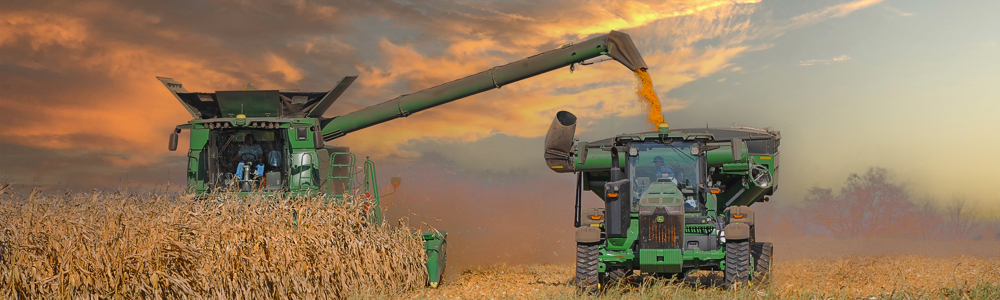
The answer starts in the field, not the bag. Livestock owners often ask: "How can I ensure my livestock feed is consistent, batch after batch?" The key is in the ingredients. At Thompson Show Feed, we deliver a reliable feed you can count on by growing the majority of our own corn. This deliberate, farm-to-mill approach allows us to control quality, consistency, and nutritional value from the ground up, eliminating the unpredictable variability of the commodity market.
When you evaluate feed quality, the conversation typically centers on protein percentages, energy levels, or mineral supplements. But the foundation of truly exceptional feed starts much earlier, at the ingredient level, in the field.
At Thompson Show Feed, ingredient sourcing isn't an afterthought or a purchasing decision made on price alone. It's a deliberate process rooted in agriculture, stewardship, and an unwavering commitment to consistency. By growing our own corn, we take direct ownership of one of the most critical ingredients in livestock nutrition and ensure it consistently meets the exacting standards you deserve.
Learn more about our family's commitment to quality feed production.
Why Ingredient Sourcing Matters in Livestock Feed
Every bag of feed is only as good as the ingredients inside it. When feed companies source grain from multiple suppliers or rely entirely on the commodity market, quality can vary significantly from load to load. This variability translates directly to challenges in your barn:
-
Inconsistent animal performance from batch to batch
-
Digestive upset when grain quality fluctuates
-
Unpredictable energy intake that disrupts growth patterns
-
Difficulty maintaining condition and finish during critical feeding periods
You invest too much time, money, and effort into your animals to accept these unknowns. Controlling where ingredients come from and how they're grown, harvested, and stored, helps eliminate this variability and creates the foundation for predictable, reliable performance.
Why Corn Quality Is So Important
Corn serves as the primary energy source in most livestock feeds, making it the backbone of your nutrition program. Its quality directly affects every aspect of feed performance:
-
Digestible energy levels that fuel growth and maintenance
-
Feed efficiency and cost-effectiveness
-
Palatability and consistent intake
-
Overall ration balance and predictability
The devil is in the details. Factors such as kernel density, moisture content at harvest, test weight, and storage conditions all significantly influence how corn performs in a feed ration. Lower-quality corn doesn't just reduce energy levels, it can dilute your entire feeding program, reduce voluntary intake, and create frustrating inconsistencies that you see reflected in your animals' condition and performance.
When corn quality varies, everything else becomes harder to manage. When corn quality is consistent, your feeding program works the way it should.
Growing Our Own Corn: The Thompson Show Feed Difference
Unlike many feed companies that rely entirely on the open grain market, the majority of the corn used in Thompson Show Feed is grown by Thompson Farms. When additional corn is needed, it's sourced locally from trusted growers we know personally, allowing us to maintain strict quality standards and full accountability.
Our corn is grown within miles of the Thompson Show Feed mill in Wilmington, Ohio. This isn't just convenient, it's strategic. This proximity allows us to closely monitor growing conditions throughout the season, make harvest-timing decisions based on grain quality rather than trucking schedules, and maintain storage practices that preserve nutritional integrity.
Being involved from planting to processing gives us control over variables that other feed manufacturers simply cannot manage:
-
Monitoring crop health from emergence through maturity
-
Making harvest decisions based on optimal grain quality, not market timing or logistics
-
Controlling storage conditions to preserve nutritional value and prevent degradation
-
Maintaining batch-to-batch consistency you can depend on
-
Responding quickly when adjustments are needed
Because Thompson Farms is directly invested in raising the corn that becomes Thompson Show Feed, every decision about crop management is guided by what produces the most reliable feed performance, not just commodity availability or spot market pricing.
This vertical integration means we're not just a feed company. We're farmers feeding your livestock. Discover more about what sets Thompson Show Feed apart.
How Corn Quality Impacts Nutrition and Performance
High-quality, consistent corn contributes to measurable improvements across every species:
-
More consistent energy delivery for predictable daily gains
-
Improved voluntary feed intake because animals respond to quality
-
Better feed efficiency that stretches your feed dollar
-
Reliable body condition and finish throughout the feeding period
-
Reduced digestive challenges from ration inconsistencies
When corn quality remains consistent, you can fine-tune your feeding program with confidence. Animals respond predictably, making it easier to manage growth curves, maintain condition, and achieve target finish. You're not chasing problems, you're managing a program.
What This Means by Species
Show pigs: Consistent corn quality supports steady voluntary intake, promotes gut health, and delivers predictable growth curves without the peaks and valleys that come from variable feed quality. Learn more about keeping your show pig fresh and jackpot-ready.
Show cattle: Reliable energy levels help maintain body condition, promote bloom and hair quality, and support feed efficiency throughout long feeding programs where consistency matters most. Read our guide on optimizing nutrition for show cattle and feeding steers and heifers for winter jackpot season.
Show goats: Uniform corn quality aids consistent intake and helps goats stay fresh, alert, and responsive to ration adjustments during the critical weeks before competition.
Common Questions Livestock Producers Ask About Corn Quality
Does all corn provide the same nutritional value?
No. While corn may look similar, its nutritional value varies widely depending on hybrid genetics, growing conditions, maturity at harvest, drying methods, and storage practices. A bushel of corn from a properly managed field harvested at optimal moisture can deliver significantly more available energy than corn subjected to stress, harvested too early or too late, or stored improperly.
How does moisture content affect feed quality?
Corn harvested or stored at improper moisture levels can lose significant nutritional value. High-moisture corn risks mold development and mycotoxin contamination. Over-dried corn can develop stress cracks and lose kernel integrity, reducing digestibility. Proper moisture management from harvest through storage is essential for preserving the nutritional quality your animals need.
Why does consistency in corn matter so much?
Inconsistent corn creates inconsistent feed. When energy levels fluctuate from batch to batch, you'll see it reflected in variable intake, unpredictable daily gains, and difficulty maintaining condition. Consistency allows you to manage a feeding program rather than constantly adjusting to unexpected changes.
Can poor-quality corn impact digestion?
Absolutely. Lower-quality corn may reduce palatability, leading to decreased intake. It can also be less digestible, meaning your animals consume feed but don't extract the nutrition you're paying for. In some cases, poor-quality corn can contribute to digestive upset, particularly in animals under show-day stress or during ration transitions.
How does growing your own corn help feed quality?
By growing our own corn, we eliminate the variables that come with commodity sourcing. We control field selection, hybrid choice, nutrient management, harvest timing, drying protocols, and storage conditions. Every decision is made with feed quality as the primary consideration—not market timing or transportation logistics.
Do you test your corn for quality?
Yes. Thompson Show Feed routinely tests grain for critical quality indicators including moisture content, test weight, and overall condition. This testing ensures every load of corn meets our standards before it enters our mill.
How should I adjust feeding when weather changes?
Weather significantly impacts feed intake and performance. Learn how to adjust feed when weather changes to keep your animals performing their best through heat, humidity, and cold.
What This Means for Your Livestock
For producers committed to excellence, consistent feed translates directly to results:
-
Fewer surprises in the barn and more time managing animals instead of troubleshooting problems
-
More predictable animal performance that allows you to plan and execute your feeding program with confidence
-
Better control over growth and condition during the critical weeks that determine success
-
Peace of mind knowing what goes into every bag meets standards set by people who understand what's at stake
When feed starts with carefully sourced ingredients grown with intention, everything downstream, from mixing to feeding to show day becomes more reliable and manageable.
Conclusion
Great livestock feed doesn't start in the mixer. It starts in the field. By growing our own corn and maintaining hands-on control over ingredient sourcing, Thompson Show Feed delivers the consistency, quality, and reliability you demand.
For producers who refuse to compromise on quality, that means feed you can count on and animals that perform the way they should, predictably, consistently, and competitively.
Because your livestock deserve ingredients chosen with the same care you put into raising them.
Ready to see the Thompson Show Feed difference? Browse our swine feed options, cattle feed programs, and goat feed solutions, or contact us to discuss your feeding program.