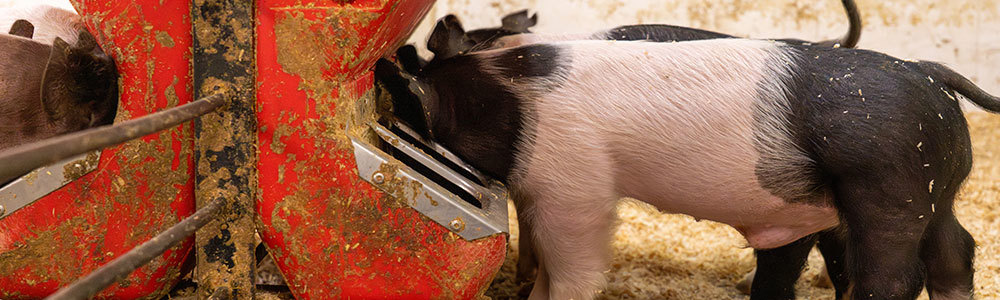
Bringing a new show pig project home is one of the most exciting days of the year for FFA and 4-H families. The success of that project over the next several months depends almost entirely on the foundation you build in the first thirty days. Managing transitions between growth stages requires a disciplined approach to nutrition that balances muscle development, frame growth, and body condition.
Key Takeaways
- The first 24–48 hours at home should focus on hydration and gut health rather than aggressive growth.
- Transitioning between feed stages should be a gradual blend to prevent digestive upset and "stalling" out.
- Thompson T150 provides the high-octane start necessary for young pigs to bloom quickly after the stress of moving.
- Thompson 1611 and 1813 allow you to "throttle" growth and muscle expression based on the individual animal's needs.
- Strategic supplementation with Souped Up is the key to achieving the final 5% of show-ring readiness.
The gap between a good pig and a grand champion is often found in the feeder. When you bring a pig home from a breeder, they are transitioning from a high-competition environment to a solo or small-group pen. Consistency in your feeding schedule is the only way to ensure the animal never misses a day of gain.
The Foundation: Getting Them Started Right
The transition from the breeder’s facility to your barn is the most stressful period in a show pig’s life. During this phase, the goal is to maintain the "bloom" they had at the farm while supporting their immune system.
- Environmental Stability: Keep pens clean, dry, and draft-free to ensure the pig spends energy on growth rather than staying warm.
- Water Quality: Clean, fresh water is the most important nutrient; pigs will not eat if they are not drinking.
- Gut Health: Stress can lead to a "break" in the gut, making a probiotic or electrolyte support critical in the first week.
Once the pig is settled, you can begin pushing for the frame and muscle shape that will define their look in the ring.
The Thompson Roadmap: Stage-by-Stage Nutrition
Each pig develops at a different rate, but having a standard roadmap allows you to make adjustments before a problem becomes visible.
The Starter Phase: Thompson 1060, T150, 1813
When you first bring your project animal home, they need a high-protein, high-fat ration to overcome the stress of the move.
High-Quality Protein
Thompson T150 - 1813 is formulated with highly digestible protein sources that support rapid muscle fiber development in young pigs.
Balanced Energy
The fat content in T150 - 1813 ensures that the pig has enough energy to maintain its "baby pig bloom" while it adjusts to a new environment.
Digestive Support
This formula includes specific ingredients designed to promote gut health and lower gastrointestinal function during the critical post-weaning period.
The Grower and Finisher Phases: 1611, 1408, 1060
As your pig grows, you have to decide whether you need to build more mass or refine the muscle they already have.
- Thompson 1611 (The "Mover") — This is our go-to grower for pigs that need to stay together, and maintain a steady weight gain without getting too "hard" in their muscle shape.
- Thompson 1813 (The "Shaper") — For pigs that need more expression and a "showier" look, 1813 provides the extra protein punch to pop the top and widen throughout.
Animals that receive consistent, quality nutrition across these stages show:
- Square, level tops that hold their shape while in motion.
- Deep, soft ribs that indicate a healthy internal capacity.
- Clean, sound joints that can handle the stress of the show ring.
- Sleek skin and hair coats that reflect internal health.
Managing these transitions is the difference between an animal that peaks too early and one that hits its prime on show day.
Practical Application: How to Feed for Success
Knowing what is in the bag is only half the battle; how you deliver it matters just as much. You should be weighing your feed, not just "scooping" it. Small changes in volume can lead to big changes in weight gain.
Feeding Protocols for Youth Exhibitors
Feed your pigs twice a day at the same time every day. This creates a routine that helps the pig's metabolism stay consistent. If you notice a pig is leaving feed in the trough, back off slightly for the next meal rather than letting it sit and get stale. Watch for signs of "stalling". If a pig stops gaining, it is usually a sign that the gut needs a reset or the protein level is too high for their current growth stage.
Common Mistakes to Avoid
Switching Feeds Cold Turkey
Changing from a starter to a grower overnight can cause scours or cause the pig to go off feed for several days.
Guessing the Weight
Without a scale or a weight tape, you cannot accurately calculate your Average Daily Gain (ADG), leading to pigs that are over or under their target weight.
Neglecting the Bucket
Old, wet feed in the corners of the feeder can grow mold and bacteria, causing health issues that are easily avoided with a daily cleaning.
Where Supplements Fit In
Supplements should be viewed as the finishing touches on a masterpiece. They are designed to enhance specific traits once the base nutrition has done its job. [When to start show pig supplements]
Supplements for Show Pig Shape and Bloom
In the final 30 to 45 days before your target show, you may need to adjust the animal's "look" to match the current trends in the ring.
Relevant options from the Thompson Show Feed lineup:
- Souped Up — This is our premier finishing supplement designed to add "pop" to the muscle and a high-gloss bloom to the skin and hair. thompsonshowfeed.com/swine-feed/supplements
- Show-Rite Yolked — Used to enhance muscle expression and top shape without making the animal look restricted or tight.
- Lindner Full Figure — A fat-based supplement that helps soften the rib and add "cover" to pigs that are looking too lean.
Supplements work best when layered onto a consistent base feed program like Thompson 1611 or 1813.
FAQ
What should I feed my show pig the first day I get them home?
The first day home is about hydration and comfort. Start by offering the same feed the breeder was using to maintain consistency. If you are transitioning to Thompson 1060, begin by mixing it 50/50 with their previous feed. Ensure they have access to fresh water with electrolytes to help them recover from the stress of the trailer ride.
When is the right time to move from Thompson T150/1813 to Thompson 1611?
Generally, you should transition to Thompson 1611 once the pig reaches 100-125 pounds. However, look at the animal, not just the scale. If the pig is becoming too heavy muscled or hard too early, move to 1611 sooner to allow their frame to catch up to their muscle.
How do I know if my pig needs the higher protein in 1813 or if I should stay on a grower?
Thompson 1813 is designed for the "show-ready" look. If your pig looks a little soft or lacks "pop" in their top as you approach show season, 1813 provides the protein levels needed to sharpen that muscle expression. If your pig is already very muscular and "hard" looking, stay on 1611 to keep them sound and soft.
Can I mix different Thompson swine feeds together?
Yes, and many of the most successful exhibitors do exactly that. Mixing different feeds allows you to customize the protein and fat percentages to the exact needs of your pig. This "blending" technique is a great way to transition between stages without a sudden change in the diet.
When should I start adding Souped Up to my pig’s daily ration?
Souped Up is most effective when introduced 30 to 60 days before your target show. Start with a small amount—typically 2 to 4 ounces per feeding—and gradually increase it. This gives the pig's system time to utilize the high-density nutrients for maximum bloom and muscle "pop" on show day.
Conclusion
Building a champion requires a roadmap, but it also requires the flexibility to adjust based on what the animal tells you each day. By starting with the high-octane nutrition of Thompson T150/1813 and utilizing the versatility of 1611 and 1060, you give your project the best possible foundation. Consistency in the barn leads to confidence in the ring.
Build Your Champion with Thompson
The right feed plan turns potential into performance. Our Thompson swine line is built by producers who know what it takes to stand in the center of the ring.
Explore our swine feed and supplements: 👉 thompsonshowfeed.com/swine
Have questions about your feeding program? Contact the Thompson Show Feed team. We're here to help.